

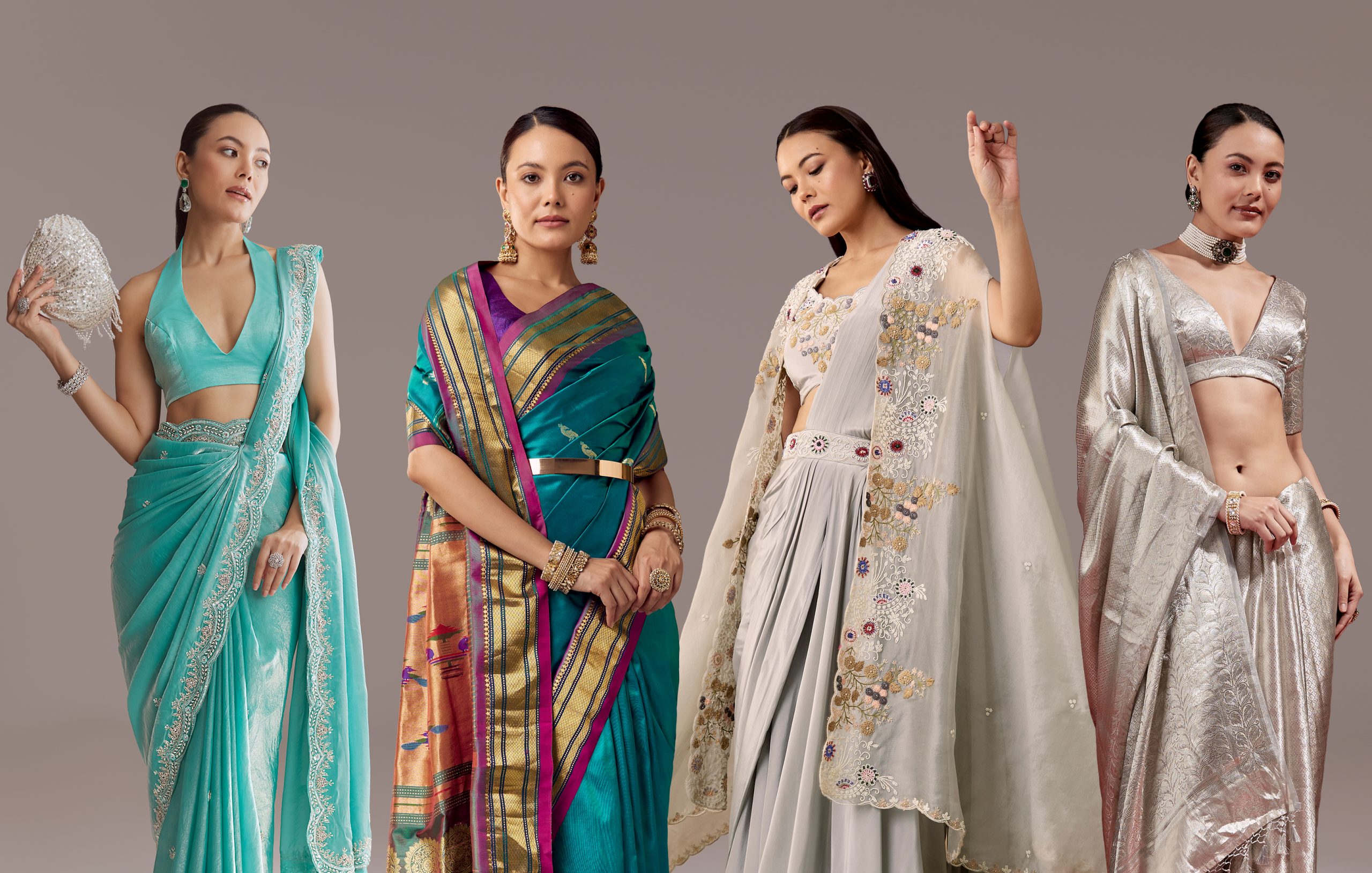

Women these days may drape saree in modern style, but no one can deny the fact that these have evolved from traditional draping methods and are an important part of our culture.
A Reflection of Regional Heritage
Different saree draping styles reflect the traditions, culture, and heritage of different regions. Each style was invented keeping in mind the weather, lifestyle, and customs of the people living in that region.
Uniqueness in Tradition and Technique
The special quality of these varied saree draping styles lies in their unique traditions and techniques. From different fabrics to different draping and pleating methods, all revolve around their rich traditions and culture.
Iconic Saree Draping Styles from Different Indian States
Here are a few famous ways of draping a saree that make you look elegant and graceful.
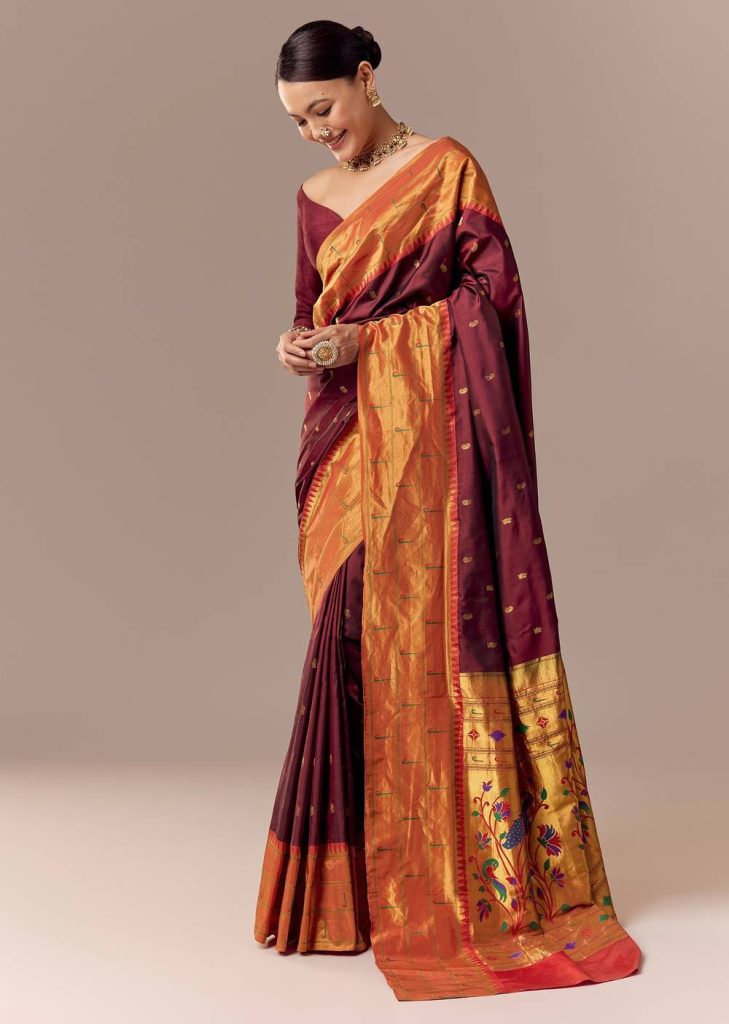
1. Maharashtra: The Nauvari Drape
The Nauvari drape is a nine-yard saree style that is worn without a petticoat and draped like a dhoti. Worn with a short choli and traditional jewellery, this saree draping style allows you to move freely and is commonly worn at weddings, festivals, and special occasions.
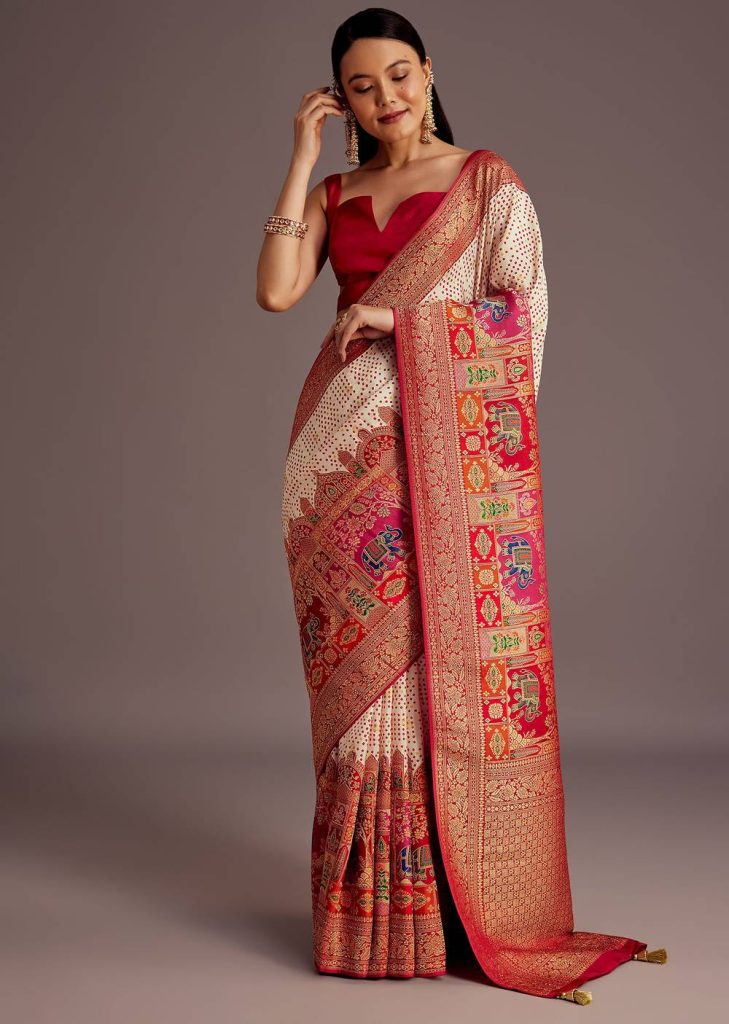
2. West Bengal: The Bengali Drape
Do you know what makes the Bengali style saree so unique? It is their box pleats that are tucked at the back and the neat pallu that is worn over the shoulder. Paired with a red bindi, gold jewellery including a nose ring, jhumkis and bangles, this drape gives you a stunning look.
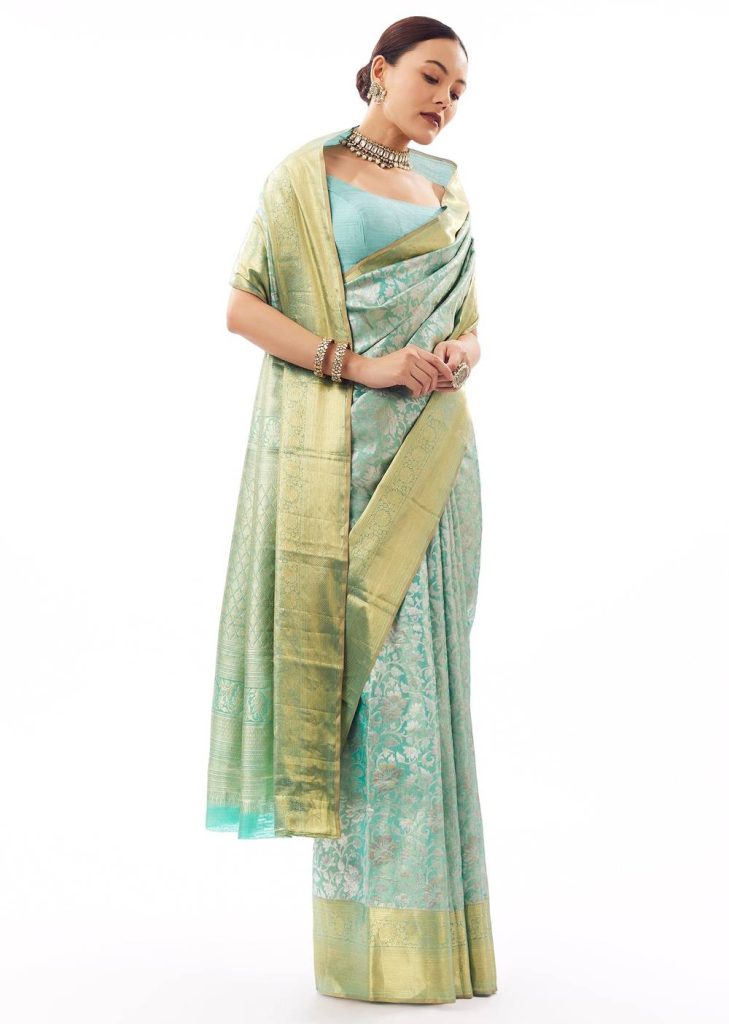
3. Tamil Nadu: The Madisar Style
The Madisar saree style is worn using a nine-yard saree that is uber comfortable and allows ease of movement. Most commonly, cotton fabric is used for these sarees, except for some communities where silk is also used for special occasions. Mostly worn in subtle colours such as beige, yellow, light red, etc., it is paired with a simple blouse and traditional jewellery.
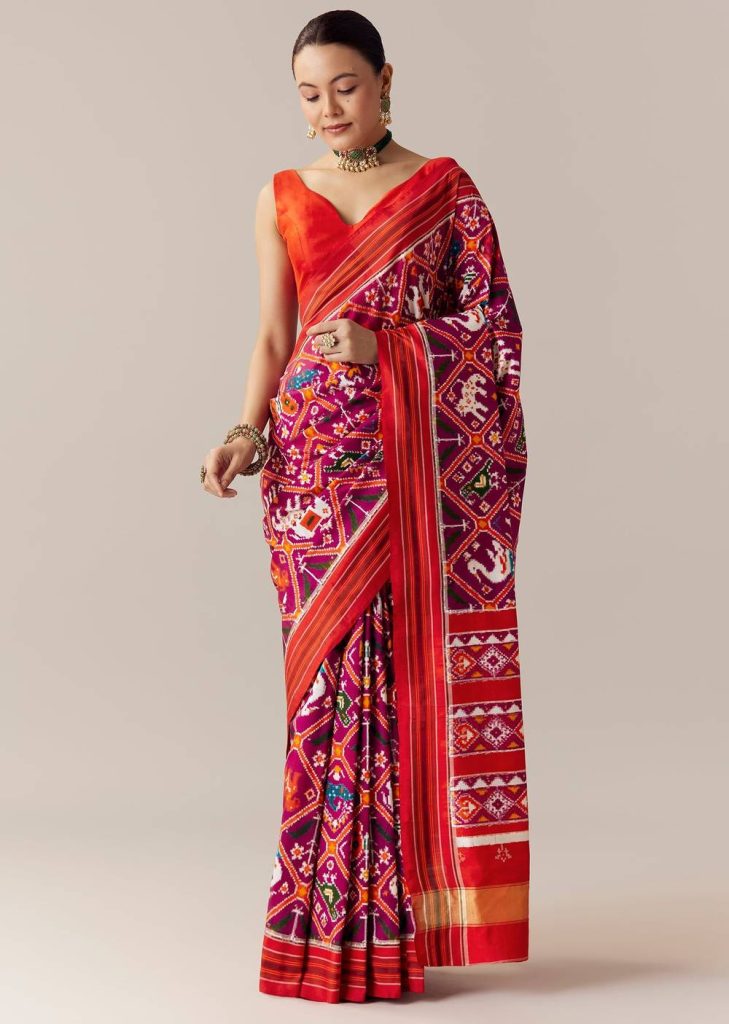
4. Gujarat: The Seedha Pallu Drape
The Gujarati style saree, also called the seedha pallu drape, is a very famous saree draping style where the pallu falls from back to front. It is commonly worn during weddings, festivals, and garba celebrations. Flaunt bandhani sarees, silk sarees, patola sarees with rich pallu and heavy borders in this style and look astonishing. Our very gorgeous Neeta Ambani is often seen wearing this drape, looking like a million bucks.
5. Kerala: The Mundum Neriyathum Style
Be it the famous festival of Onam, a wedding, or a religious ceremony, the Mundum Neriyathum style is a popular choice in Kerala. It is a two-piece silhouette, with one piece worn around the waist and the other wrapped around the shoulder.
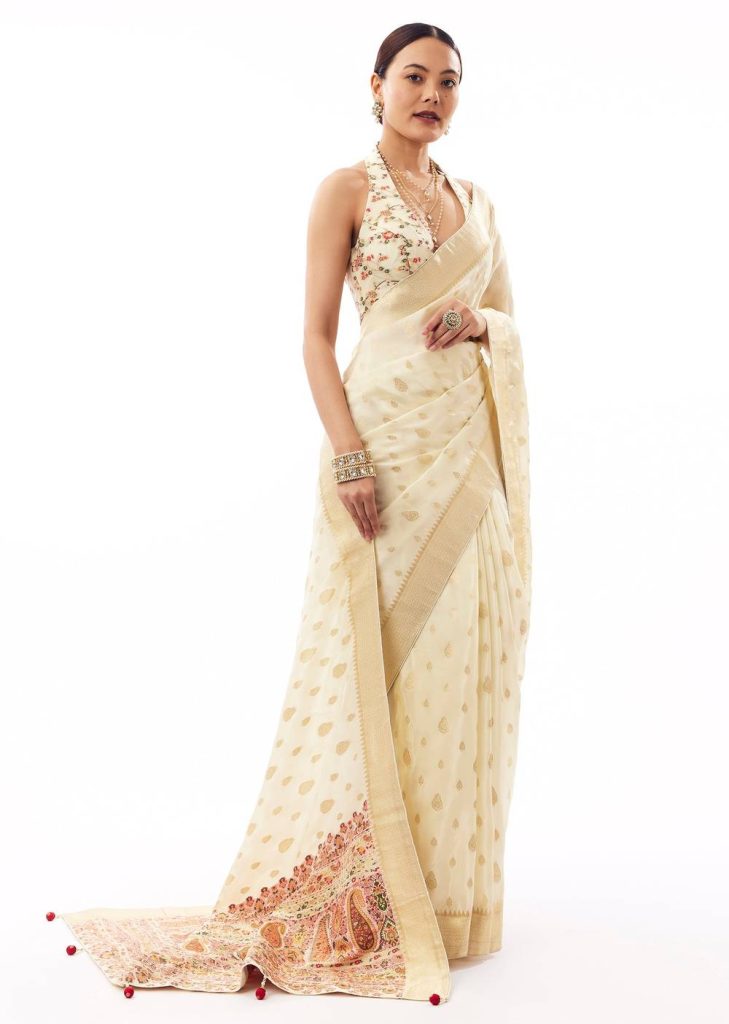
Tips to Master Saree Draping
1. Choose the Right Fabric for the Drape: Not all sarees can be draped in all styles. So choose the right fabric that will fit your desired drape. Chiffon, georgette, crepe, etc., are an excellent choice for Seedha Pallu drape or lehenga style drape, whereas cotton or silk sarees are perfect for Nauvari, Madisar, Bengali and Mundum Neriyathum Style.
2. Practice Tucking and Pleating Techniques: A well-draped saree is one that is pleated and tucked well. Practise making pleats and tucking them neatly, and carry the attire with style.
3. Use Pins Strategically for Secure Draping: Wish to dance and move around freely while wearing a saree? Make sure you use safety pins to pin up the pleats and the pallu.
FAQs
India proudly boasts 70-80 regional saree draping styles that vary as per the region, culture, weather and occasion.
Most of the sarees, like chiffon, georgette, crepe, etc., that are lightweight can be draped in numerous ways. A few exceptions, like silk sarees with heavy borders, may not be apt for a few draping styles.
Crepe, cotton, georgette, chiffon, etc., sarees are easiest to drape for beginners because of their soft and falling texture.
Belts, offbeat blouses, fusion jewellery, etc., can be paired with regional draping styles that will make you look fashionable at modern events.
Saree draping techniques can be learnt at home by watching tutorials online and practising with old, lightweight sarees.